Case Study: Women’s Clothing Promotion from RUB 0 to 800,000 per Month
Initial Situation
This company manufactures and sells women’s clothing — dresses, blouses, jumpsuits, suits, trousers, and other items. It was already working in wholesale, and the decision was made to launch retail sales on Instagram. There was no Instagram account yet, let alone any sales. I started completely from scratch.
Note from 10 April 2022: after Instagram was blocked in Russia following certain events in Ukraine, we switched to promotion on VKontakte. I have therefore also described the VKontakte results below.
Work Process
I decided to position the client’s products as dresses for women who are tired of wearing jeans. This was the main idea I managed to uncover from the client during the initial interview.
I also studied competitors extensively. I followed the strongest accounts, read customer comments, and mainly looked for what women liked and disliked. I also analysed how competitors promoted themselves — their posts, advertising, and other activity. I even asked women I knew why they bought dresses online.
As a result, I concluded that the main customer pain point was this: Chinese-made dresses were everywhere, while a genuinely good-quality dress was often too expensive. Women wanted a quality dress — not a cheap Chinese product — at a reasonable price.
Based on this, I used the account name “Farberry Everyday Dresses”. I also considered “Farberry Dresses for Every Day”, but it did not fit within Instagram’s character limit for the name field. About a year later, I changed it to “Farberry Branded Clothing” because I felt that women preferred buying not just clothing, but branded clothing.
Based on the customers’ pain points, I added the following:
- Not Chinese-made and not a reseller
- European quality at a reasonable price
- Own production
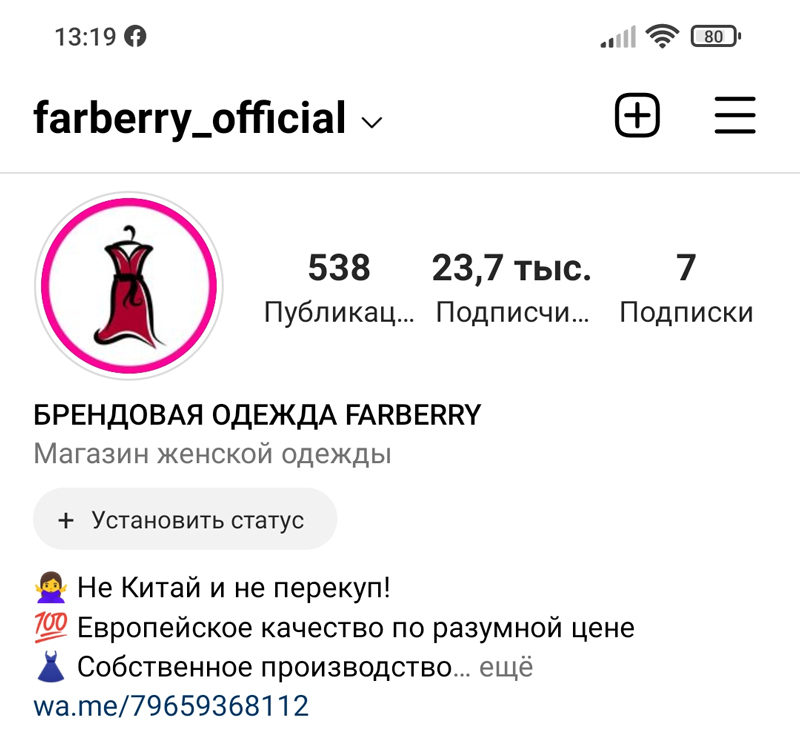
I then added a WhatsApp link and phone number.
I also carefully planned the posts. Each post started with a short introduction explaining the name of the dress or other item, followed by its characteristics and then instructions on how to order.
At first, I used broad hashtags such as “dresses” and similar terms. Later, Instagram tightened its requirements and began reducing reach for accounts that used broad, non-branded hashtags. So I left only branded hashtags.
Later still, I used hashtags as a kind of navigation system, so that all posts featuring the same dress could be found by its name. This allowed visitors to view the same dress in different colours and videos.
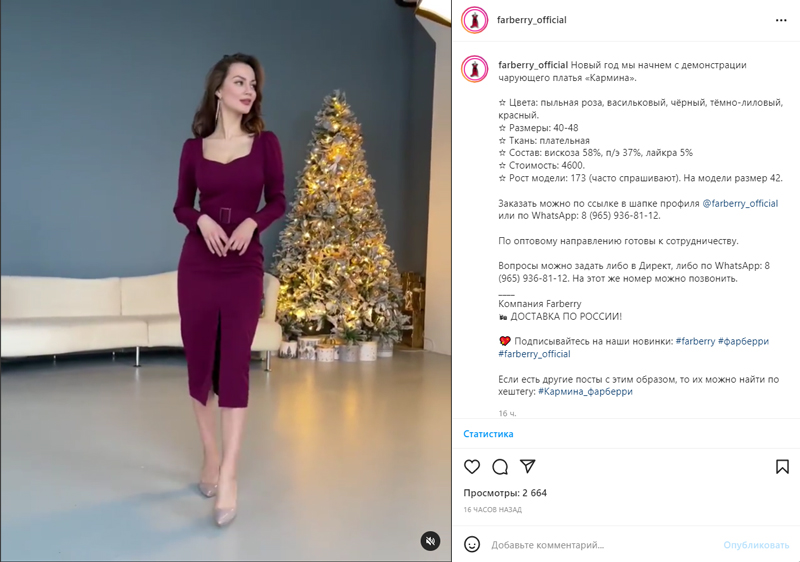
At first, I mainly used photos in the posts, but later I noticed that video performed better, so I switched almost entirely to video and used photos only occasionally.
I Developed a Sales Script
For a long time, I personally replied to Direct messages and processed orders. I tested different approaches and eventually found that the following process worked best:
- First, I asked for body measurements in a 90-60-90 format and the customer’s height. Why? Because these had to be matched to the company’s sizing chart. Sometimes a woman would say she wore, for example, size 42, while her actual measurements corresponded to size 40 or 44.
Height was also important because some dresses were designed for taller women. On shorter women, they could hang like a sack. To avoid unnecessary returns, it was better not to ship such a model in the first place. Instead, we offered another similar model that would suit the customer’s height. - Next, I asked for the delivery address and phone number.
- Then I combined all the details and repeated them back in a confirmation question: “Dress model X, measurements X, colour X, address X, phone number X. Is everything correct?”
- Once I received confirmation, I replied: “Great. You can pay in the following way…” and then provided the payment instructions.
The company works on 100% prepayment. Some orders were lost because customers were afraid to prepay an unfamiliar company without even trying the dress on in person. However, this sales script helped reduce the number of such refusals.
I also created a separate reviews section containing customer testimonials and real photos of customers wearing our dresses. This helped increase trust as well.
Later, we hired a manager whose only job was to process orders. Customers often asked whether a particular dress was in stock — which required checking the inventory database — or how long a particular dress was — which meant physically measuring it — along with many other questions I simply could not handle myself at scale.
I continued publishing posts and Stories and managing the advertising campaigns.
Advertising
I attracted subscribers only through targeted advertising: standard white-hat ads in the feed, Stories, and Reels. I did not use any grey- or black-hat methods that could result in an account ban.
In this image, you can see the cost per click and the cost per conversation started. Usually, a conversation begins with a customer asking about the price.
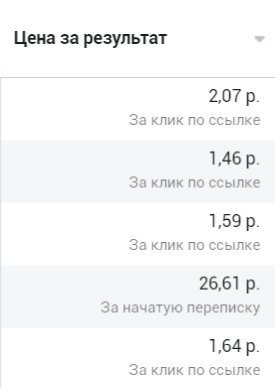
These figures are not entirely representative because I took the screenshot during the New Year holidays. Many competitors turn off their advertising at that time, while I did the opposite and continued advertising because competition was lower. As a result, visits to the account were about twice as high as usual. In other words, under normal conditions the real costs were roughly twice as high.
Moving to VKontakte and Telegram
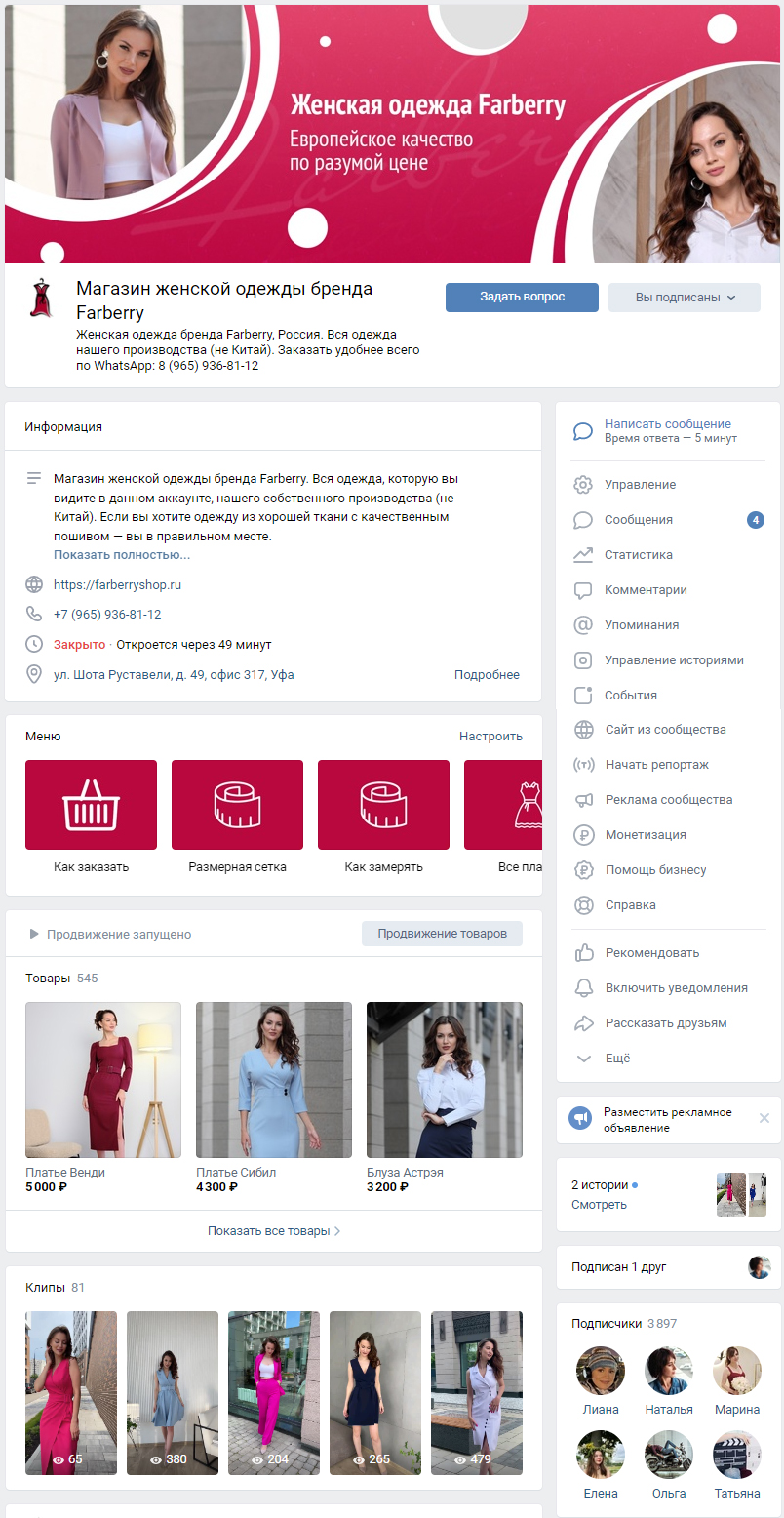
After Instagram was blocked in Russia, we had to move quickly to VKontakte and Telegram. On VKontakte, I did the following:
- Created separate account headers for desktop and mobile;
- Added the USP and contact details to the header;
- Set up the menu with links to frequently requested information such as the size chart, ordering instructions, and other useful pages;
- Added a product catalogue and created a bestsellers section that was displayed on the main page;
- Added clips and featured them on the main page because dresses are a highly visual product;
- Added Stories for the same reason;
- Added a video gallery containing almost 300 videos;
- Added a photo gallery;
- Added links to our websites and other social networks;
- Started publishing posts every day;
- Launched targeted advertising.
This is what the VKontakte account looked like:
I created the Telegram account in a similar way. There is not much that needs to be designed there, so I mainly used it to publish posts as well.
Results
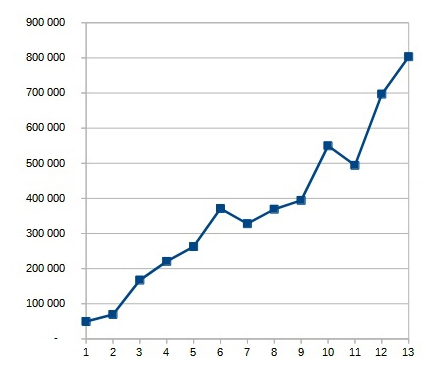
At that point, the account had more than 28,000 followers on Instagram and 3,800 on VKontakte. Sales for the latest month exceeded RUB 800,000 — RUB 803,275 to be exact — while advertising spend was only RUB 30,000. The maximum I had ever spent on advertising was RUB 72,000.
I originally wrote this case study at the end of winter 2022, while the dresses are mainly summer products. In other words, it was the off-season, and sanctions following the events in Ukraine also had an impact — including the blocking of Instagram and a sharp increase in prices. Even so, sales remained strong. This is what the sales chart looked like at the time:
During the high season, I expected this account to generate at least RUB 1,000,000 in sales per month.
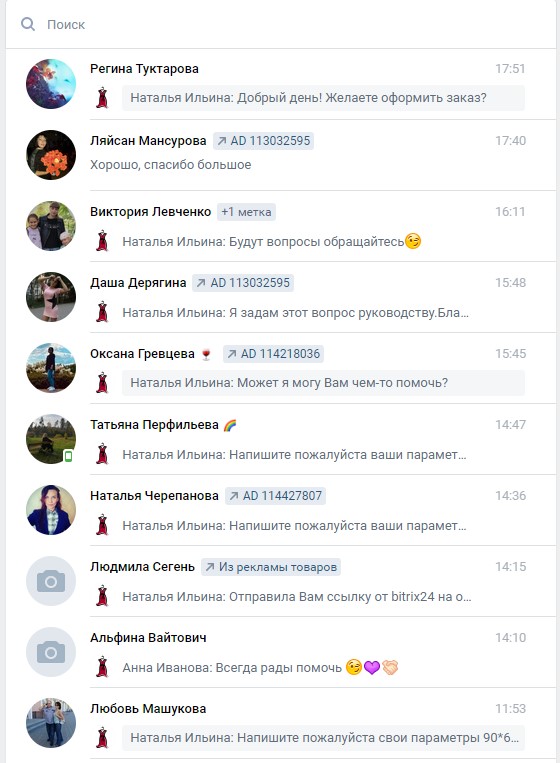
Here is how many enquiries we received on VKontakte in just one day — and this was not even the full number:
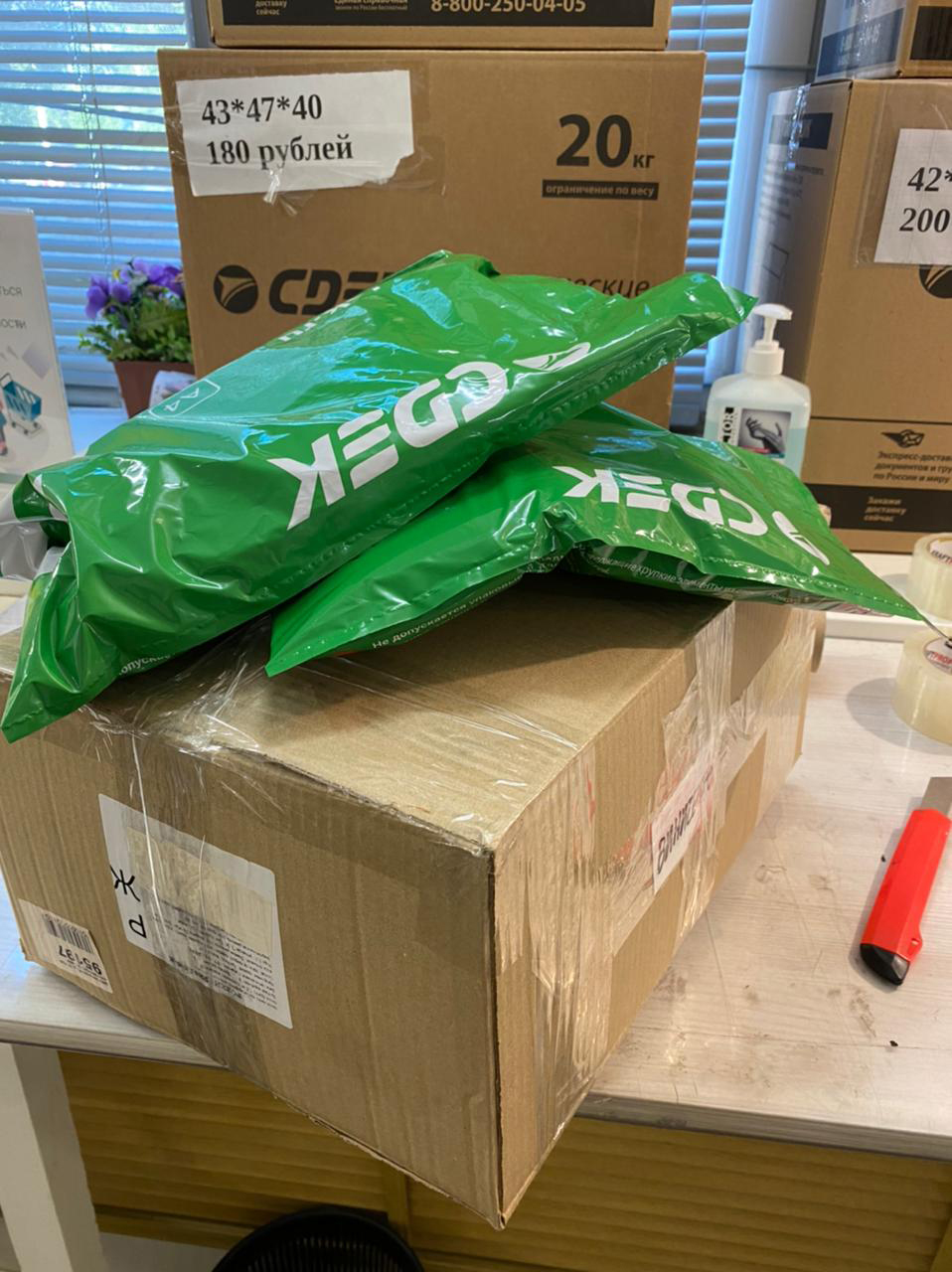
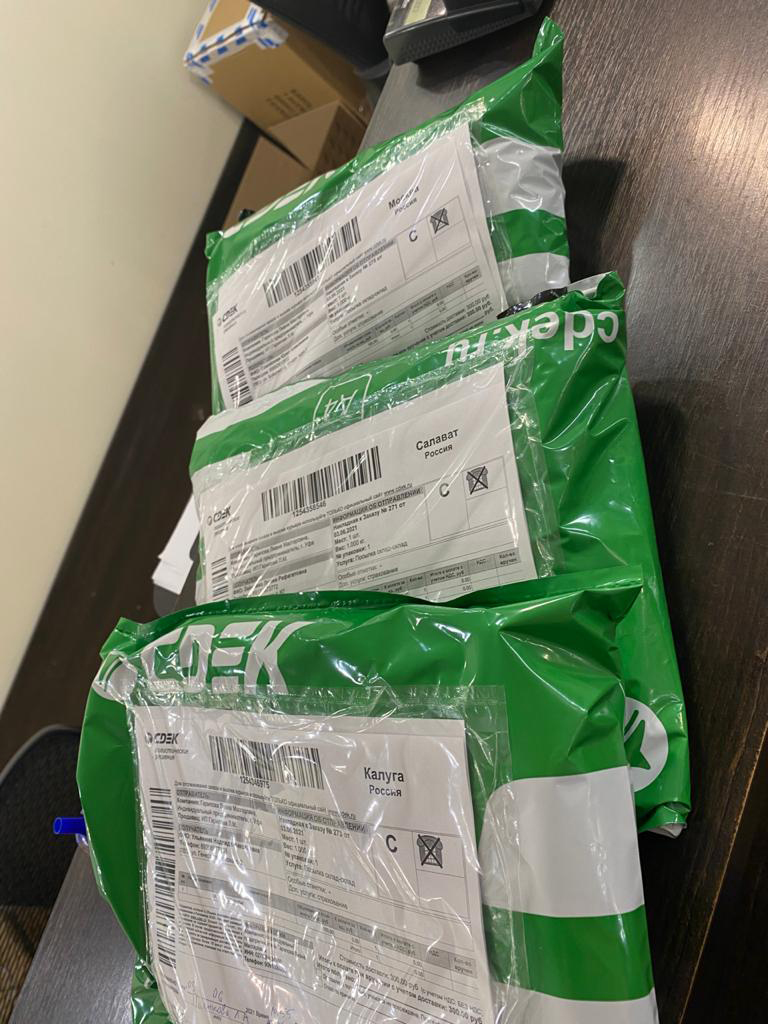
This is roughly how many orders we usually shipped in a day:
Overall, the project was performing well. If you would like similar sales results from social media, contact me about promotion.